
If you are wondering how to become ordained online through the National Association of Christian Ministers (NACM), start by reviewing our Statement of Faith and applying for membership. Accepted members may submit a separate ordination request. An NACM Elder evaluates the candidate’s theology, testimony, and call to ministry.
You can begin the process to become an ordained minister online from where you live. Christian ordination recognizes a call to serve Jesus Christ within the Body of Christ. Here is what you can expect from the online process and the fellowship behind it.
1. What It Means to Become an Ordained Minister Online
For those who want to become an ordained minister online through NACM, ordination is formal recognition of a call to Christian ministry. The online application gives candidates a way to share their testimony and ministry plans. An Elder evaluates the request in light of NACM’s evangelical beliefs and standards for Christian character.
In Ephesians 4:11-12, Paul describes ministry leaders equipping believers for the work of ministry and building up the Body of Christ. That purpose gives ordination its context. A minister receives recognition in order to serve, teach, and care for others in keeping with the calling God has given.
Discern the Call to Serve
The call to ministry is not the result of human ambition but a sacred gift, planted by the Spirit deep within a heart willing to serve. Prayer becomes the doorway where this calling is tested, refined, and confirmed, shaping a life that is anchored not in comfort but in obedience.
As you seek Him with humility, trust that He who calls you is also faithful to equip you, for as Scripture says, “He who calls you is faithful; he will surely do it” (1 Thessalonians 5:24, ESV). Ordination, then, is not about pursuing a title but surrendering to a greater mission, one that demands a heart molded by Scripture, corrected by grace, and led by Christ. It is the outward testimony of an inward reality: that God has called, and you have answered with your life.
“And he gave… shepherds and teachers, to equip the saints for the work of ministry, for building up the body of Christ.” (Ephesians 4:11-12, ESV)
Christian fellowship also gives that calling a place to be tested. The people you already serve can often describe your gifts more concretely than you can. Ask a mature believer what they have seen you do faithfully and where they see room for growth. Their feedback can help you explain why you are seeking ordination at this point in your ministry.
For the biblical framework behind calling, preparation, and recognition, see the Christian Ordination Guide.
2. How to Become Ordained Online Through NACM
If you are exploring how to become ordained online through NACM, start with membership. Review the Statement of Faith, then follow the application link at the end of that page. Once accepted as a member, you may request ordination and complete a theological evaluation with an Elder.
| Stage | What to expect |
|---|---|
| Membership | Share your testimony and your reasons for seeking fellowship with NACM. |
| Ordination request | Describe your call to ministry, the people you serve, and the work you intend to pursue. |
| Elder evaluation | Discuss your theological beliefs and readiness for recognition. |
| Recognition | Approved candidates receive recognition for Christian ministry. Optional credential documents can be ordered separately. |
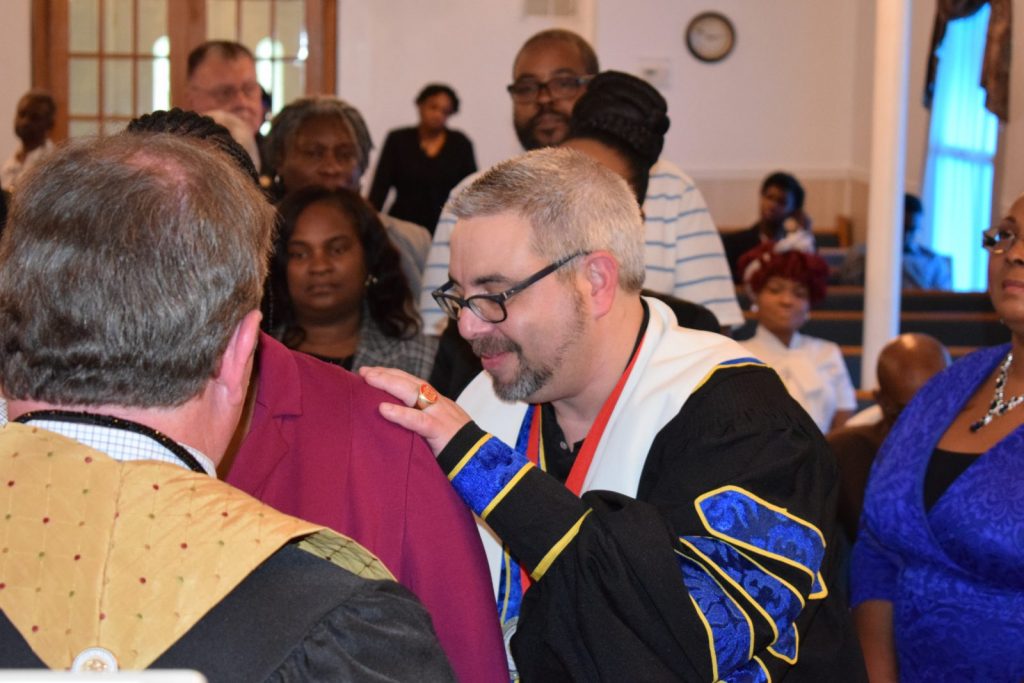
NACM offers in-person laying on of hands for qualified members at State Gatherings in the United States. Read how the online process and laying on of hands fit together. If you are ready to become an ordained minister, follow the four-step NACM ordination guide.
3. Prepare to Become an Ordained Minister
Before you ask to become an ordained minister, take time to describe the service you are already doing. Tell the Elder where you serve, who you serve, and what responsibilities you have taken on. If you lead a small Bible study, you could explain how you prepare lessons and whom you ask for counsel when a passage raises a difficult question.
Describe what led you to seek recognition as an ordained Christian minister online. Someone who visits homebound church members might explain how the visits began, what the people receiving care have asked for, and how the ministry coordinates with local church leaders. An applicant whose plans are still developing can describe the next practical step and the guidance they need.
Before you apply to become an ordained minister online, read the NACM requirements for ordination. Those requirements explain what NACM expects concerning evangelical faith, personal conduct, a demonstrated call, and the Elder evaluation.
As you review the Statement of Faith, look up its Scripture references. Try explaining an important belief in your own words, then connect it to a decision you have faced in ministry. That exercise prepares you for a substantive conversation about how your faith informs your service.
4. What It Means to Be an Ordained Christian Minister Online
If you are seeking recognition as an ordained Christian minister online, ask what the organization affirms and what responsibilities you will carry afterward. NACM recognizes ministers for Christian service. NACM ministers serve independently and are responsible for their own ministry decisions.
“Not domineering over those in your charge, but being examples to the flock.” (1 Peter 5:3, ESV)
Galatians 6:4-7 calls believers to examine their own work, carry their responsibilities, and remember that what they sow has consequences. For a minister, this means taking responsibility for the way you teach, lead, and care for others. Seek counsel when you face a decision that affects the people you serve. Give others room to raise questions and take their concerns seriously.
If you become an ordained minister through NACM, that accountability matters in ordinary decisions as much as public ones. If someone asks you to teach on a subject you have barely studied, seek help before you speak. If a church asks you to lead a ministry, clarify the role and who will provide oversight. The habits you develop in these situations say more about the way you serve than the credential you carry.
Churches, denominations, and institutions may set their own expectations for particular positions. If your goal is to serve in a specific church or organization, speak with its leadership about its requirements. That conversation can help you understand whether it requires its own commissioning, training, or other qualifications.
For weddings, civil authority depends on the jurisdiction where the ceremony takes place. Contact the local office responsible for marriage licenses before agreeing to officiate. NACM requires a legal marriage license and a marriage covenant for weddings performed by its ministers. See NACM’s wedding officiant requirements for details.
You can become an ordained minister through NACM without paying a fee for membership or ordination recognition. Optional credential documents are separate purchases. Members can read the membership and accountability policy for details about recognition, credentialing, and good standing.
5. Continue Serving in Christian Fellowship
After you become an ordained minister, keep serving the people and communities that first drew you to ministry. For one minister that may mean teaching a small group. Another may be helping a local church build an outreach ministry or supporting families through grief. Ask fellow ministers for perspective when you encounter responsibilities you have never carried before.
Join a Ministerial Community
Ministry is never meant to be walked alone. When you step into ordination, you also step into a fellowship of believers who share burdens, rejoice in victories, and stand together in prayer. You’ll be welcomed into a national network of ministers who encourage one another, study God’s Word together, and continually build each other up in faith and service. Through active discussion groups, abundant ministry resources, and opportunities for ongoing biblical education, you will grow not only in knowledge but in Christlike character.
It’s important to understand that within this fellowship, financial solicitation is neither practiced nor permitted. The National Association of Christian Ministers does not request donations from its members, and we expect our members not to seek financial contributions from one another. We recognize that everyone in ministry has financial needs; however, our community is built on the mutual encouragement of faith, not financial opportunity. If you are seeking a platform to raise money, this is not the place for you. As Scripture reminds us, “Therefore encourage one another and build one another up, just as you are doing” (1 Thessalonians 5:11; ESV), and we are committed to ensuring that this encouragement remains pure, genuine, and centered in Christ.
Begin Serving
Many ministers serve faithfully in small groups, where lives are changed through the personal ministry of the Word and prayer. Others are called to plant churches, establishing new communities of faith grounded firmly in Scripture and guided by the Holy Spirit. Some dedicate their ministry to teaching the Scriptures, equipping believers to grow in spiritual maturity and biblical understanding. Still others step into the vital work of supporting underserved communities, demonstrating the love of Christ through both word and deed. In every form of service, they labor under biblical accountability, walking in fellowship with others, and bearing one another’s burdens as they advance the Kingdom of God.
“Do not grow weary of doing good, for in due season we will reap, if we do not give up.” (Galatians 6:9; ESV)
As you begin serving, choose one responsibility you can carry faithfully. A new Bible study leader could start by inviting feedback after each session. A minister developing an outreach could first ask the people already working in the community what help would be welcome. Small commitments give you a place to practice what you believe and receive counsel as you grow.
If you become an ordained minister online through NACM, the fellowship offers a place to share ministry experience, pray together, and learn from one another. The NACM Manual to Ministry offers resources for studying Scripture and preparing for practical ministry. Members also complete annual renewal to maintain good standing with the fellowship.
“Bear one another’s burdens, and so fulfill the law of Christ.” (Galatians 6:2, ESV)
If you’re ready to learn how to become ordained online through NACM, read what we believe. If you affirm the Statement of Faith and are seeking fellowship in Christian ministry, the membership application is available at the end of that page.
