
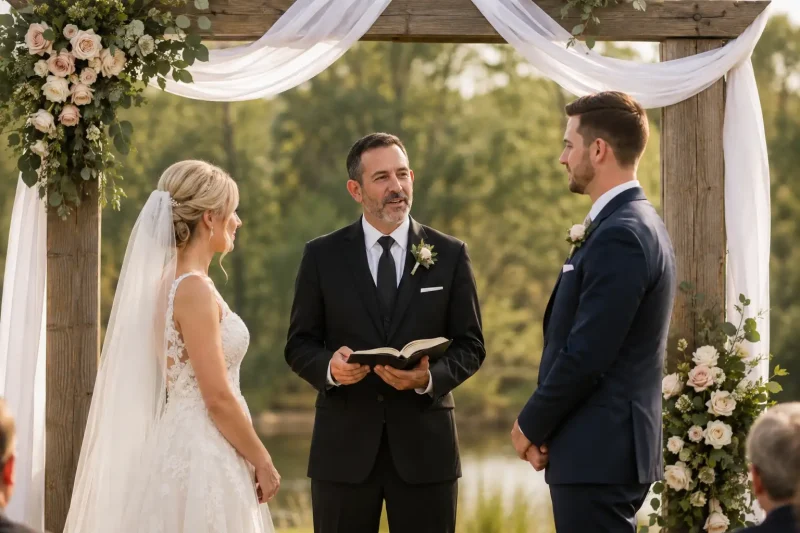
Become a Certified Wedding Officiant Through NACM
Prepare to serve Christian couples as a certified wedding officiant through the National Association of Christian Ministers. NACM’s Certified Christian Wedding Officiant course connects biblical instruction with original ceremony writing and instructor evaluation. Qualifying NACM-recognized ordained ministers in good standing can strengthen their preparation through this optional course. This marriage minister certification recognizes successful completion of the prescribed training.
If you want to become a marriage minister, begin with the Christian calling behind the ceremony. NACM offers a ministerial fellowship for Christians who share its Evangelical Protestant convictions. Accepted membership comes before pursuing ordination through our organization. For qualifying ordained ministers, certification for marriage officiant ministry provides additional preparation through practical work and evaluation.
If you want to be certified to marry people, consider both your ministerial recognition and your preparation to lead a Christian wedding. NACM connects that practical goal with biblical conviction, pastoral responsibility, and evaluated work. You may be preparing for your first wedding or strengthening a ministry you already practice. The course helps you develop a ceremony you understand and can lead with confidence.
Why Choose NACM Certified Wedding Officiant Training?
A certified wedding officiant needs more than a ceremony script. Couples need a minister who understands Christian marriage and prepares carefully to lead their service. NACM’s course brings those responsibilities together through instruction, practical assignments, and original work. Students build their own ceremony while learning how its individual parts serve the Christian purpose of the wedding.
The course is taught by Rev. Michael Mooney, Executive Elder of the National Association of Christian Ministers. Its instruction draws on more than twenty years of wedding ministry experience. Students consider the decisions involved before, during, and after the ceremony. Instructor evaluation provides an opportunity to identify weaknesses and improve their work before completing the prescribed requirements.
This approach gives marriage minister certification practical substance. Students do more than read descriptions of a Christian service. They write, consider feedback, and develop material they understand. A completed ceremony becomes a resource they can personalize thoughtfully for appropriate use in their ministry.
Become a Marriage Minister With a Christian Foundation
To become a marriage minister through NACM, start by considering whether our beliefs reflect your convictions. Our Statement of Faith explains the shared faith behind the fellowship. Membership and ministerial recognition involve their applicable review processes. The wedding officiant course is an optional next step for qualifying ordained ministers in good standing.
Christian marriage has a biblical foundation that should shape the service from its opening to its conclusion. The course presents marriage as a holy covenant established by God between one biological man and one biological woman. Genesis 2:18-24 provides an important foundation for understanding that relationship. Ministers learn to preserve the distinctly Christian purpose of the ceremony while serving the couple with pastoral care.
A Christian wedding officiant must always remember whose minister he or she is.
When you become a marriage minister, that identity guides what you say and how you prepare. Expectations should be discussed with the couple before the wedding day. The biblical message, prayers, and vows should work together as parts of a Christian service. Careful preparation helps a certified wedding officiant lead with conviction and clarity.
Prepare to Serve the Couple With Clarity
A wedding brings together people who may have different expectations about the service. Some couples have attended many Christian weddings, while others may be unfamiliar with the meaning of particular prayers or promises. Preparation gives the minister time to explain the service rather than leave those questions until the rehearsal. It also helps the couple understand the commitments they will express before God and their witnesses.
Clear communication begins with listening carefully to what the couple expects. The minister can then explain the Christian foundation of the ceremony and discuss how its parts fit together. Questions about wording, participation, and practical arrangements deserve attention before the wedding day. Addressing them early supports a service that is thoughtful, understandable, and consistent with the minister’s convictions.
7 Essential Skills for a Certified Wedding Officiant
The course follows the work of preparing and conducting a Christian wedding. These seven areas summarize the preparation students develop through its lessons and assignments. Each connects understanding with a responsibility that arises in wedding ministry. Together, they help students move from individual exercises to a complete original ceremony.
- Explain Christian marriage. Understand its biblical foundation and covenant meaning.
- Communicate ministerial expectations. Discuss the Christian purpose of the ceremony with the couple.
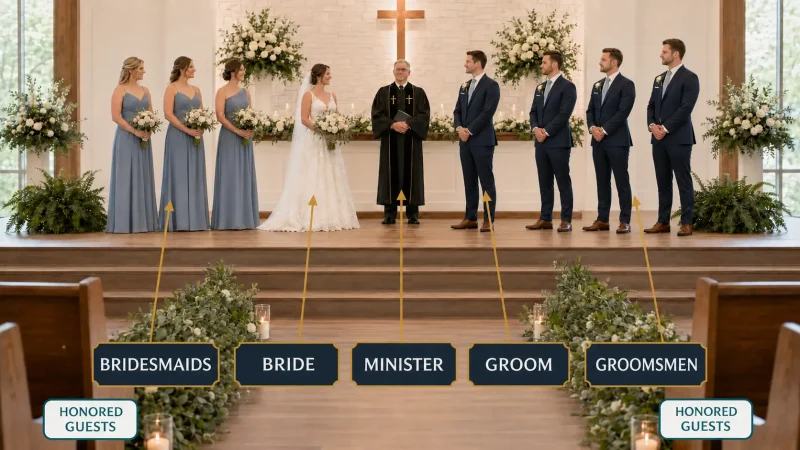
- Organize the wedding. Consider the setting, service order, practical arrangements, and rehearsal.
- Write the ceremony’s opening. Develop the welcome, prayer, biblical message, and declaration of intent.
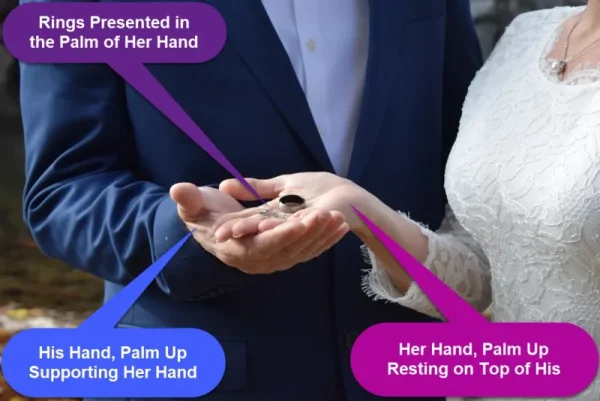
- Prepare vows and rings. Write Christian covenant vows and plan a meaningful presentation of the rings.
- Lead the conclusion. Prepare the final charge, closing prayer, pronouncement, and presentation of the couple.
- Handle practical responsibilities. Verify local requirements, attend to marriage documents, and prepare for unexpected situations.
A certified wedding officiant should understand how these parts fit together. An opening establishes the purpose of the service, while the message explains the meaning of marriage. Vows and rings express commitments that the ceremony has helped the couple and witnesses understand. A prepared conclusion brings the service to a clear and appropriate close.
Certification for Marriage Officiant Ministry Through Original Work
If you are seeking certification for marriage officiant ministry, consider what you will be asked to demonstrate. NACM students develop an original Christian ceremony through practical written assignments. Their work includes an opening, prayer, biblical message, declaration of intent, vows, rings, and closing. Instructor evaluation connects those assignments with the course’s expectations.
This makes certification for marriage officiant ministry a learning process with a practical goal. Students consider language, biblical content, and the responsibilities of leading the service. They receive feedback and revise their work as needed. Successful graduates finish the prescribed preparation with a developed ceremony they can understand and adapt thoughtfully.
Certification for marriage officiant ministry also involves preparation for decisions outside the ceremony itself. Couples need clear communication about expectations and the arrangements for their wedding. Rehearsals and document handling require attention alongside spoken delivery. As you pursue certification for marriage officiant ministry, these responsibilities connect your training with Christian identity and pastoral judgment.
Develop a Ceremony You Can Explain and Lead
Writing your own ceremony encourages you to understand the purpose of every part. A welcome should help those present understand why they have gathered. A biblical message should connect Scripture with the meaning of Christian marriage. Prayers, vows, and the closing should support that purpose through language the couple and witnesses can follow.
Consider how the ceremony will sound when spoken aloud. A sentence that reads well on a screen may be difficult to deliver clearly before a congregation. Reading your work aloud can reveal awkward transitions, unnecessary repetition, or places where a shorter sentence would help. Thoughtful revision makes the service easier to lead without losing its biblical substance.
Practical preparation also includes thinking through the order of events. The minister should know when the couple will speak, when rings will be presented, and how the conclusion will proceed. Discussing those details at a rehearsal can help participants understand their roles. A clear plan gives the minister more attention to offer the people involved when the wedding day arrives.
How NACM Marriage Minister Certification Is Earned
NACM marriage minister certification follows successful completion of the Certified Christian Wedding Officiant course requirements. Students complete lessons, quizzes, original written assignments, instructor evaluation, a comprehensive final examination, and an original Christian ceremony. Enrollment begins that process. Completed and evaluated work demonstrates that the prescribed preparation has been fulfilled.
Graduates receive an NACM Certified Christian Wedding Officiant Certificate. The certificate and shipping are included in course tuition. Marriage minister certification is separate from ordination and recognizes completed wedding ministry training. The optional course is not a requirement for receiving NACM ordination.
That distinction helps you identify your next step. A newcomer begins with shared faith, membership, and the applicable ministerial review process. An eligible ordained minister can consider the course as additional preparation. In either situation, marriage minister certification should reflect a commitment to learning and faithful Christian service.
Understand What “Certified to Marry People” Means
Being certified to marry people can mean different things to someone beginning this search. NACM course certification recognizes successful completion of its wedding ministry training. It does not replace ordination or applicable civil requirements. Ministers must verify the current requirements where each wedding will take place.
If your goal is to be certified to marry people, include this verification before accepting a ceremony. Consult the appropriate government office about officiant eligibility and any registration or documentation procedures. Confirm the requirements for inspecting, completing, signing, and returning marriage documents. Before describing yourself as certified to marry people, understand what your training certificate recognizes and what the relevant government office requires.
Begin With the Fellowship Behind Your Ministry
Becoming a certified wedding officiant is an opportunity to strengthen the way you serve Christian couples. NACM connects that preparation with a fellowship grounded in shared Christian beliefs. Its course develops original work through instruction and evaluation. Its membership pathway begins with the convictions behind the ministry.
Whether you hope to become a marriage minister or develop an existing wedding ministry, consider that foundation first. Read NACM’s beliefs and decide whether they reflect your Christian calling. Accepted membership precedes pursuing ordination, and qualifying ordained ministers may pursue the optional course. Begin with the Statement of Faith that guides our fellowship.