
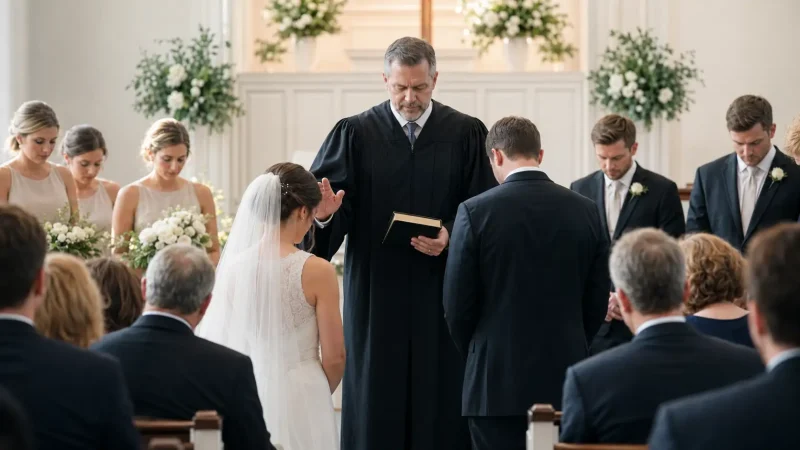
How to Become a Christian Wedding Officiant
For Christians who want to officiate weddings as a ministry, not merely perform a ceremony.
If you are wondering how to become a wedding officiant or marriage officiant, you may be thinking first about ordination, a license, or the legal requirements where you live. Those questions matter. But for a Christian, there is another question that should come first:
Is Christ at the center of the ministry you want to offer?
The National Association of Christian Ministers provides qualified Christians with a path to apply for organizational recognition through Christian ordination. NACM also offers continuing fellowship, resources, and ministry-development opportunities, including an optional Christian Wedding Officiant course for qualifying NACM-recognized ordained ministers.
Apply for Christian Ordination
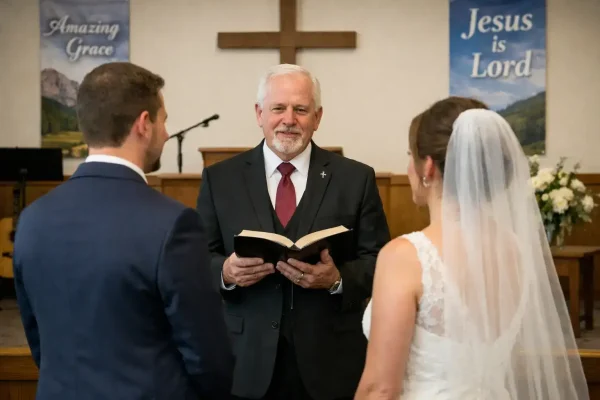
A Clear Path Into Christian Wedding Ministry
Step 1: Consider Your Call to Christian Ministry
Ask whether your desire to officiate weddings is connected to a sincere call to serve Jesus Christ. NACM ordination is intended for Christians who affirm NACM’s beliefs and standards and seek recognition of a genuine ministerial calling.
Step 2: Apply for Christian Ordination Through NACM
Complete the online application for review. Approval is not automatic or guaranteed. Applicants who satisfy NACM’s requirements may be recognized as ordained Christian ministers.
Step 3: Prepare to Serve in Christian Wedding Ministry
After ordination, continue developing as a minister. Qualifying NACM ministers may choose to complete the Christian Wedding Officiant course and work toward certification through study, original assignments, instructor evaluation, and demonstrated readiness.
You do not have to take the Christian Wedding Officiant course to become ordained. The course is one of the many opportunities NACM offers to help its ministers continue developing after ordination.
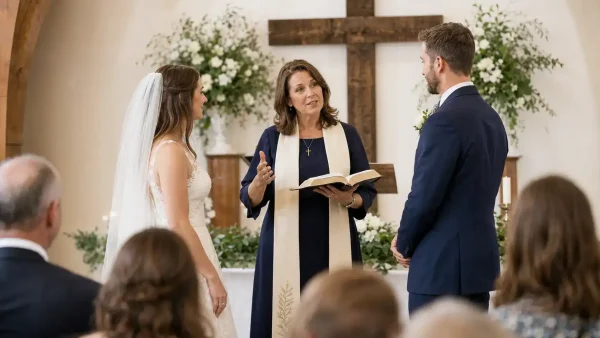
Officiating Christian Weddings Is a Ministry
A Christian wedding officiant does more than stand before a couple, read words, and sign a document. The minister helps a man and woman enter a covenant before God, represents Jesus Christ before their families and guests, and accepts practical and administrative responsibilities that continue after the ceremony ends.
This is why NACM approaches the question, “How do I become an officiant?” differently from organizations that treat ordination as a quick credential for a single event. NACM is a Christian ministerial fellowship with defined beliefs and standards. It does not present ordination as a diploma for anyone of any religion who simply wants permission to conduct a ceremony.
Our concern is not only whether someone can say, “I am ordained.” We care about the minister’s Christian calling, convictions, conduct, preparation, and continued success in faithful ministry.
NACM is concerned not only with recognizing ministers, but also with helping them think and act responsibly after they are ordained.
Why This Ministry Matters
For more than 20 years, the experience behind this course was formed through real Christian wedding ministry.
NACM’s founder had already served in ministry for several years when he began sensing that God was leading him to officiate Christian weddings. At first, the idea conflicted with his own assumptions. He had often viewed wedding officiating as more of a business than a serious ministry to God’s people.
Over time, he began to recognize an overlooked need among sincere Christians who wanted to honor God through marriage:
- Some had relocated and had not yet found a local church or pastor.
- Some had become disconnected from church because of painful past experiences.
- Some attended congregations so large that the pastor did not know them personally.
- Some had been divorced, or encountered pastoral requirements that kept marriage beyond their practical reach.
These were not necessarily people trying to avoid God. Many were believers who wanted to correct their living situation, enter marriage, and begin that covenant with Christ at the center. They needed a Christian minister who would take both their faith and their marriage seriously.
What began as an unexpected calling became a rich ministry. Couples were often seeking more than someone who could legally conduct a wedding. They valued a minister who sincerely believed what he preached, understood marriage as a covenant before God, and had dedicated his life to serving Christ.
Today, the responsibilities of NACM no longer leave its founder time to continue officiating weddings personally. The Christian Wedding Officiant course was created to help prepare another generation of Christian ministers to carry that ministry forward.
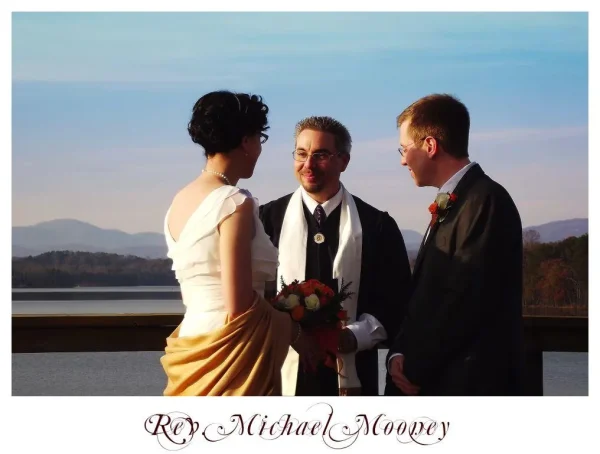
Whose Minister Will You Be?
A couple may have preferences about the ceremony. Families, venues, coordinators, and social expectations may add pressure. Payment can create another kind of pressure. In the middle of all these interests, a Christian wedding officiant must remember whose minister he or she is.
A Christian minister serves Jesus Christ first. That identity should govern every conversation, decision, rehearsal, and ceremony.
NACM prepares ministers to conduct distinctly Christian, evangelical Protestant weddings. The course presents marriage as a holy covenant established by God between one biological man and one biological woman. It does not prepare students to conduct civil-only, interfaith, non-Christian, Roman Catholic, or Orthodox ceremonies.
Appropriate personalization can help a ceremony reflect the couple. It should never require the minister to conceal, surrender, or misrepresent the Christian character of the ministry being offered. Faithful service combines conviction with kindness, clarity, pastoral wisdom, and respect for applicable civil requirements.
What Online Ordination for Weddings Means at NACM
People searching for online ordination for weddings often ask how to get ordained to marry someone, how to get ordained to marry people, or how to become ordained to perform weddings. At NACM, the process begins with Christian ministry rather than with a ceremony.
You may submit your application online, but NACM ordination is not an automatic online transaction. It is NACM’s organizational recognition of a Christian ministerial calling in applicants who meet its requirements. Applying does not guarantee approval.
If you are asking how to become a wedding officiant online, understand that an online application is only one part of the path. A responsible minister must also determine the current requirements of every state and locality where a wedding will occur and prepare to serve couples with Christian conviction and practical competence.
Begin the NACM Ordination Application
Ordination, a Wedding Officiant License, and Local Requirements
Searchers often use phrases such as “how to get a license to marry someone,” “how to get license to officiate a wedding,” or “how to get licensed to perform weddings.” The word “license” can refer to different things, so it is important to understand what NACM does and does not provide.
NACM provides organizational recognition through Christian ordination. NACM does not issue a government wedding officiant license, provide legal advice, or promise that one process satisfies the requirements of every jurisdiction.
Depending on where a ceremony occurs, an ordained minister may need to complete government registration, provide documentation, obtain court authorization, or follow other state or local procedures. Every officiant remains personally responsible for verifying current requirements through authoritative government sources before accepting or conducting a wedding.
Preparation That Goes Beyond Reading a Script
The optional Christian Wedding Officiant course is designed to develop biblical faithfulness, ministerial judgment, legal awareness, professional competence, and pastoral presence. It prepares ministers to serve a couple from the first conversation through the completion and return of the marriage documents.
Rather than merely copying a ceremony from the Internet, students progressively develop an original Christian wedding ceremony. Their work addresses the opening, prayer, biblical message, declaration of intent, ring presentation, vows, final charge, closing prayer, and pronouncement. They also learn to preserve a master ceremony while creating an appropriate working copy for each couple.
The course prepares ministers to:
- Explain marriage biblically as a covenant established before God.
- Establish Christian expectations and ministerial boundaries before accepting a ceremony.
- Serve couples with kindness without compromising Christian convictions.
- Research current state and local officiant requirements through authoritative government sources.
- Inspect, complete, protect, and return marriage documents responsibly.
- Distinguish an elopement from a coordinated wedding and plan appropriately for each.
- Communicate with couples, coordinators, venues, photographers, musicians, and wedding participants.
- Establish appropriate fees, deposits, travel expectations, reservation policies, and service boundaries.
- Plan and lead rehearsals with calm, clear direction.
- Respond wisely to missing rings, absent participants, sound failures, weather problems, impairment, coercion, medical emergencies, threats, and other unexpected situations.
- Recognize when a concern exceeds pastoral competence and qualified legal, clinical, medical, protective, or emergency help is needed.
Certification Is Earned Through Demonstrated Work
Enrollment alone does not make a student a NACM Certified Christian Wedding Officiant. The course includes lessons, quizzes, original written assignments, instructor evaluation, a comprehensive final examination, and the submission of a complete original Christian wedding ceremony.
Students are expected to apply what they learn, consider instructor feedback, revise their work, and demonstrate meaningful preparation. Ministers who successfully complete the requirements earn the NACM Certified Christian Wedding Officiant designation.
The certification recognizes completion of NACM’s prescribed course of study. It does not replace ordination, civil authorization, government registration, or any requirement imposed by the jurisdiction where a wedding occurs.
Is This the Kind of Ministry You Want to Offer?
Your search may have begun with a practical question about how to become a marriage officiant. NACM invites you to consider the calling behind that question:
- Do you sincerely believe God is calling you to Christian ministry?
- Do you want Christ to remain unmistakably at the center of the weddings you officiate?
- Are you prepared to represent Jesus Christ before couples, families, guests, and wedding professionals?
- Can you uphold biblical conviction with both clarity and kindness?
- Will you accept personal responsibility for legal and administrative requirements?
- Are you willing to prepare carefully instead of relying upon a title or borrowed script?
If these questions reflect the minister you desire to become, NACM may be an appropriate place to seek Christian ordination and continue developing in ministry.
Apply for Christian Ordination to Get Started
Frequently Asked Questions
How do I become a Christian wedding officiant?
Begin by considering whether your interest in weddings is connected to a sincere call to Christian ministry. Qualified Christians may apply online for ordination through NACM. If approved, they receive NACM’s organizational recognition as ordained Christian ministers. They must then verify and satisfy the current civil requirements wherever they intend to officiate.
How do I get ordained to officiate a wedding?
If your question is how to get ordained to officiate a wedding, you may submit the NACM ordination application online. The application is reviewed according to NACM’s Christian beliefs, standards, and requirements. Approval is not automatic. Ordination is recognition of Christian ministry, not merely a temporary credential for one wedding.
Is becoming a marriage officiant different from becoming a wedding officiant?
People often use the terms interchangeably. The more important distinction is between someone who only presents a ceremony and a Christian minister who understands the wedding as a covenant before God and accepts the spiritual, practical, and administrative responsibilities involved.
Does NACM give me a license to officiate weddings?
NACM provides organizational recognition through Christian ordination, not a government-issued wedding officiant license. Most states do not offer government-issued wedding officiant license (but a few do). Each minister must verify and follow the rules that apply where the ceremony will occur.
Do I have to take the Christian Wedding Officiant course to become ordained?
No. The course is optional and is not part of the requirements for receiving NACM ordination. It is one of the continuing ministry-development opportunities offered after ordination.
Can I take the course before I am ordained through NACM?
No. The course is for qualifying NACM-recognized ordained ministers in good standing. Ordination must come first.
Is the course simply a collection of wedding scripts?
No. Students progressively create an original, biblically grounded Christian wedding ceremony while developing legal awareness, communication practices, service boundaries, rehearsal leadership, document-handling procedures, and judgment for unexpected situations.
Does enrolling automatically make me certified?
No. Certification is earned only after successful completion of all course requirements, including evaluated assignments, quizzes, a final examination, and an acceptable original Christian wedding ceremony.
What if I only want credentials for one wedding?
NACM ordination is intended to recognize a sincere Christian ministerial calling. It is not presented merely as a temporary credential for one event. If your desire to officiate a wedding is part of a broader call to Christian ministry, you may review NACM’s requirements and apply.
Carry Christian Wedding Ministry Forward
Christian couples need more than someone willing to stand at the front of a ceremony. They need ministers who sincerely follow Christ, understand the covenant they are helping a couple enter, and are prepared to serve with conviction, wisdom, and care.
If you believe God may be calling you to this kind of ministry, begin by seeking Christian ordination through an organization that cares about who you are, what you believe, and how you serve after you are ordained.